
Supporters Like You
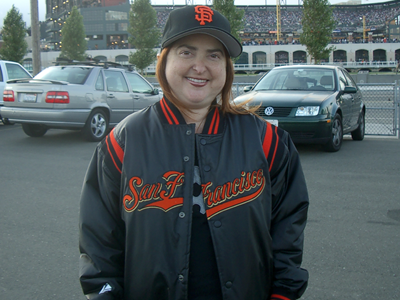
Jessica Saal & Family
From early childhood, arthritis shaped much of Jessica Saal’s life. Living with juvenile idiopathic arthritis, Jessica endured years of treatment while remaining dedicated to helping others facing the same challenges. Her deep involvement with the Arthritis Foundation helped expand programs that connected and supported young people navigating similar journeys, a commitment her family continues today.
Read more of their story
When Harry and Carol Saal’s daughter, Jessica, was 2 years old, she suddenly wanted to be picked up all the time.
“You could tell something was bothering her, and it was,” Harry shares. “It was not easy to conclude that the cause was juvenile idiopathic arthritis (JA), which affected all of the joints in her body.”
The year was 1972. At the time, there were few treatment options available. Aspirin was the treatment of choice.
“I remember discussing with the rheumatologist treating her and asking how much aspirin to give. The answer was ‘Well, you know, take as much as she can until her ears start ringing.’ But she’s 2. How do I know when her ears start ringing?”
As Jessica grew up, she went through many surgeries to have her knees, shoulders and hips replaced.
“The rehab was pretty grueling, but she always had a smile on, always made the most of the situation,” Harry remembers. And when Jessica went through these surgeries, the Saal family wasn’t alone.
“Thanks to the Arthritis Foundation, there was good outreach to families in these kinds of situations,” he says. “There were family day events, where we got to meet with doctors, physicians and researchers to discuss what was available, to get tips about dealing with day-to-day challenges and limitations of arthritis.”
Jessica became more involved with the Northern California chapter of the Arthritis Foundation as she entered young adulthood, convening her own group of young adults who were going through the same reality.
She also threw her support into helping organize Camp Milagros, a sleepaway camp for kids with JA that still operates today in Northern California.
When Jessica passed away unexpectedly in 2004 at the age of 34, the family stepped in to carry on her legacy.
“Jessica was not going to let things get in her way,” Harry says. “She was a very motivated person. She knew what the challenges were and was motivated to roll up her sleeves and deal with it. After she passed, I became personally involved and joined the board of our chapter in Northern California.”
Fueling Talent, Arthritis Research, and Real Change
When Harry and his family took up Jessica’s efforts, he didn’t want to focus solely on juvenile arthritis (JA). “My own philosophy has been to try and take a multifaceted approach,” he says. “It’s very rewarding. Looking back at how far we’ve come in all these years within the Arthritis Foundation, it’s wonderful. There’s been a strong evolution. We’re very proud to have been part of helping drive and participate in that evolution over the last several decades.”
One of those areas of interest is helping fund pediatric rheumatology fellowships that provide training and mentoring opportunities for medical students and residents from underrepresented communities.
“There was in 1972, and to this very day, a dearth of physicians with a lot of experience in dealing with pediatric cases,” Harry says. “It’s not just finding specialists but having them really understand the appropriate modalities of how to treat a child, how to deal with the family, how to deal with a sibling — you know, all kinds of psychological stresses. There’s so much involved, particularly in young people when they have a disability.”

The need for more rheumatologists is great. Currently, 14 U.S. states have only one or zero pediatric rheumatologists.
“There’s a huge variation in the level of care and the nature of the care available in different parts of the country,” Harry says. “I mean, it’s very difficult, if you’re a parent with a sick child, to go 500 miles to see a pediatric specialist once or twice a year instead of going to an adult physician in your local community hospital. There are still many pockets in the U.S. that have no pediatric rheumatologists. Or imagine, even if there is a pediatric rheumatologist, it’s 500 miles away in your state.”
One recent recipient of a fellowship through Stanford University and the Saal Family Foundation is Amanda Moyer, MD. After her fellowship, she will work with Oklahoma Children’s Hospital OU Health to develop and build a pediatric rheumatology department. Dr. Moyer plans to remain in academic medicine and will be starting as Interim Chief of Pediatric Rheumatology, Director of Pediatric Rheumatology, and Assistant Professor.
“We’re excited to see folks like Amanda make the decision to go to a rural community and provide pediatric rheumatic support and be involved in research,” Harry says. Then adds, “We’re nowhere near the finish line in terms of the number of pediatric rheumatologists needed, and filling in all the gaps across the country.”
A Legacy Continued by the Next Generation
Jessica and the rest of the Saal family have had an indelible impact on the Arthritis Foundation over the years, and the family plans to continue their involvement for generations to come.
“Our first mission was to involve … Jessica and our son Nathaniel in our foundation. The next level [is] our grandchildren. We’re getting them involved and participating in our decision making,” Harry explains, “They’re fearless … to step in and do what is clearly the right thing. They get it,” he adds.
Harry believes Jessica would be proud of the efforts their family has made in her stead. “While Jessica is no longer with us, I’m sure she’s looking down, smiling and giving a big thumbs-up,” Harry says.
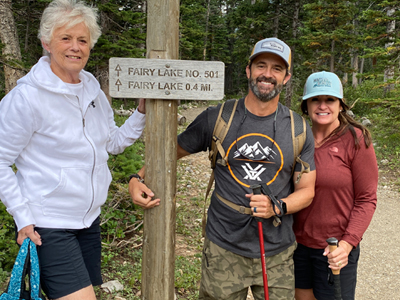
Ludlow-Griffith Family
For years, children in Montana with arthritis had to travel out of state for specialized care, adding stress for families already facing difficult diagnoses. Through a partnership with the Arthritis Foundation, the Ludlow-Griffith Foundation helped support a targeted fellowship that brought a pediatric rheumatologist to Montana for the first time in years, allowing children and families to receive care closer to home and creating lasting community impact.
Read more of their story
Willi Schmidt’s grandmother struggled with osteoarthritis in her later years, and his mother developed it when she was older. But it wasn’t until his young wife developed rheumatoid arthritis about 25 years ago — right after their daughter was born — that he began to understand the implications of rheumatic conditions among young adults and children.
Around the time his wife was diagnosed, they went to a luncheon held by the Arthritis Foundation in Denver, he recalls. “A gal who was almost the same age as my wife — her body was not receptive to any of the medications. She was probably in her early 30s and already had a couple of joints in her hands replaced. She couldn’t hold her children because the weight was too much for her to bear.”
It brought home the importance of supporting people living with arthritis and the Arthritis Foundation for its commitment to improving their lives through research, advocacy and resources.
So when the family foundation that Willi represents had an opportunity to help children in Montana receive arthritis care without leaving the state, it was an easy decision.
“Too Good To Pass Up”
Thanks to the private Ludlow-Griffith Foundation, started in the 1980s by Willi’s grandparents and now overseen by several of their descendants, Montana has its first pediatric rheumatologist in years. “We’ve contributed to the Arthritis Foundation for a long, long time, and that was due to my grandmother’s affliction, and we’ve always found little niches that have been impactful,” says Willi. “We’ve always felt that if we have confidence in the organization, we’ll give unrestricted funds and let them put those to use. But this was too good an opportunity to pass up.”
Until this year, Montana had been one of seven states in the country without a pediatric rheumatologist. In 2020, Dr. Julie Campbell was selected as a beneficiary of the fellowship. As part of the Targeted Rural and Underserved Track (TRUST) opportunity, Dr. Campbell was matched with a rural community that needed her skills. During her residency, Dr. Campbell worked with several pediatric rheumatology researchers on different projects, including one that looked at the onset of psoriasis in children, and another focusing on the onset of juvenile idiopathic arthritis in infants 12 months and younger.
Even better, Dr. Campbell was a Montana native who was interested in returning home. This year, her practice was established in Missoula, and she has been busy with a full slate of patients.
“The fact that Dr. Campbell was a native Montanan and would look for the opportunity to come back to her home state was compelling to us,” Willi says. “It’s unfortunate that there’s that need and that demand,” he adds. “It just shows you how under-served some of these populations are. But I’m much more a glass-half-full kind of guy; it’s great that now they do have somebody here who can meet those needs for the kids and for the family.”
Having a pediatric rheumatologist in Montana dramatically improves care for children and their families who previously had to travel to another state — and for those seeking a diagnosis. “The uncertainty and trying to find out what’s going on and getting that diagnosis is important,” he says.
Continuing a Tradition
The Ludlow-Griffith Foundation has had a long history of philanthropy. “My grandfather was a banker and he and my grandmother felt it was important to give back to the community that had been so good to them through the bank for all the years,” says Willi. “There’s four general areas that we have contributed to that we’ve felt are important and impacted our family,” including health and sciences, education, social services and conservation. Originally, the family focused on philanthropic efforts in the Denver area, but when Willi’s family and his mother moved to Montana, its reach spread.
The family is excited to see the effect of Dr. Campbell’s presence in the Montana community, but they know that there’s still more work to do, Willi says.
“I suppose most foundations sort of have their niche and what they want to focus on,” he says of giving back. “But if somebody hasn’t and is looking for something new, there’s lots of medical issues going on — especially in the rheumatoid and the pediatric rheumatoid arthritis space.”
By Allison Wilcosky | May 22, 2024
Join a Giving Society
Together we can do so much. Join a community of people who share your passion for improving millions of lives across the country by becoming a member of one of our giving societies.
Become an Arthritis Foundation Insider
Do you want to receive exclusive email updates directly from the Arthritis Foundation?
Get direct and instant access to a member of our team, who will share information about your impact, project outcomes and stories from the field.